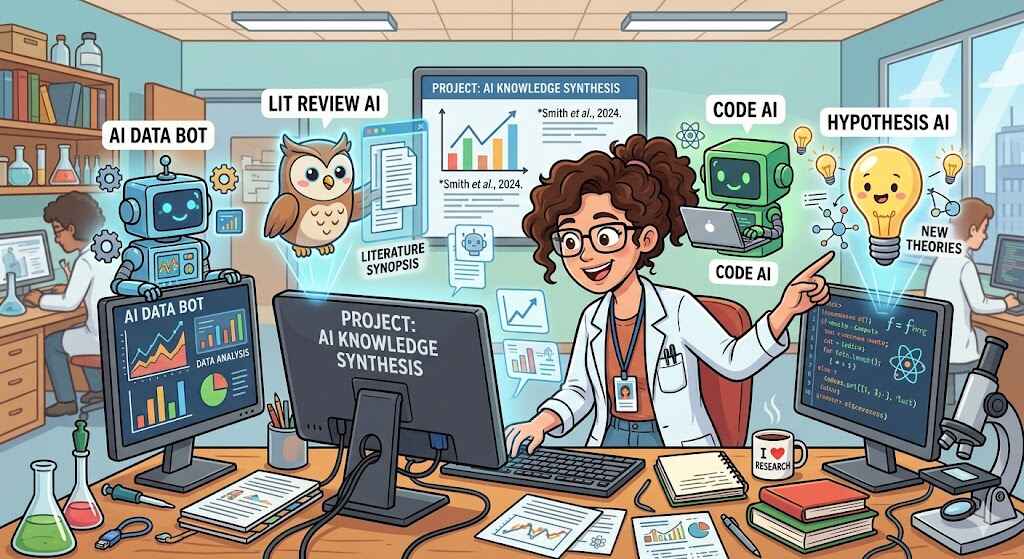
Best AI Research Assistants for Students in 2026
Academic research used to mean hours in a database, skimming abstracts and chasing citation trails. AI research assistants now compress that process dramatically, helping students find relevant papers, extract key findings, and build a defensible literature review in a fraction of the time.
Academic research used to mean hours in a database, skimming abstracts and chasing citation trails one reference at a time. AI research assistants now compress that process dramatically, helping students find relevant papers, extract key findings, and build a defensible literature review in a fraction of the time. In 2026, the best tools go far beyond keyword search - they read papers the way a research assistant would, pulling out methods, sample sizes, and conclusions so you can compare studies side by side.
This guide covers the AI research tools worth using this year, what separates a genuinely useful one from a keyword-matching search engine, and how to use these tools without compromising academic integrity.
Why Students Are Turning to AI Research Assistants
A literature review is only as strong as the sources behind it, and finding the right sources has always been the slowest part of the process. Traditional academic search engines return long lists of results ranked by keyword match, leaving the student to open dozens of PDFs just to figure out which ones are actually relevant. An AI research assistant flips that workflow: instead of matching words, it reads abstracts and full texts for meaning, then surfaces the studies that actually answer your question.
This matters most for evidence synthesis. If an assignment asks you to summarize what the research says on a topic, rather than opinion, an AI tool that can pull findings from twenty papers into a single comparison table saves hours of manual note-taking. It also reduces the risk of missing a key paper simply because it used different terminology than your search query.
What Makes an AI Research Assistant Actually Useful
Not every "AI-powered" search tool delivers real value. A few features separate the ones worth using from the ones that just repackage a basic search engine.
- Access to primary sources. The tool should link back to the actual paper, not just an AI-generated paraphrase, so you can verify claims and pull direct citations for your bibliography.
- Evidence-level answers, not opinions. A strong research assistant tells you how many studies support a claim and whether the evidence is mixed, rather than producing a single confident-sounding paragraph.
- Structured extraction. Tools that can pull out methodology, sample size, and findings into a table save far more time than one that only offers a plain-text summary.
- Citation export. Look for one-click export to BibTeX, EndNote, or Zotero, since manually reformatting citations is one of the most tedious parts of research writing.
Top AI Research Assistants for Students in 2026
Here's how the leading tools compare before the full breakdown of each one.
| Tool | Free Tier | Core Strength | Best For |
|---|---|---|---|
| Limited searches/month | Evidence-based yes/no answers | Checking what the research actually says | |
| Limited free credits | Structured literature review tables | Comparing findings across many papers | |
| Free with limits | Cited, conversational web + academic search | Fast background research on any topic | |
| Free tier available | Chat directly with a PDF | Digesting a single dense paper quickly | |
| Fully free | AI-generated TL;DR summaries + citation graphs | Free, no-signup academic search |
Consensus is built around a simple idea: type a research question and get an answer synthesized directly from published, peer-reviewed studies rather than the open web. Each claim links back to the source paper, and a consensus meter shows whether the evidence leans yes, no, or is genuinely mixed. It's especially useful early in a project, when you're trying to figure out whether a topic even has enough research behind it to support a paper. The free tier caps how many searches you get per month, with unlimited access reserved for paid plans.
Elicit is designed specifically for the literature review stage of academic work. Give it a research question and it returns a table of relevant papers with columns for methodology, sample size, and key findings, extracted automatically from each paper's full text. This turns what would normally be hours of manual note-taking into a single scannable table you can sort and filter. It's a favorite among graduate students working on theses because it makes it far easier to spot patterns and gaps across a large body of literature. The free plan includes a limited number of credits each month before requiring a paid upgrade.
Perplexity works like a conversational search engine that always shows its sources. Ask it a background question on your topic and it returns a synthesized answer with numbered citations linking to the original web pages or papers behind each claim. It's less specialized than Consensus or Elicit for pure academic literature, but its speed and general-purpose nature make it useful for scoping a topic before diving into dedicated academic databases. The free tier covers casual use, with a paid plan unlocking more advanced models and higher usage limits.
SciSpace lets you upload or link a specific paper and then chat with it directly, asking plain-language questions like "what method did they use" or "how large was the sample" instead of hunting through the text yourself. It also highlights and explains dense jargon inline, which is useful when a paper sits outside your usual field. This makes it a strong complement to Consensus or Elicit once you've already identified which individual papers deserve a closer read. The free tier limits how many papers you can process per month.
Built by the Allen Institute for AI, Semantic Scholar remains entirely free and doesn't require an account to use. Its AI-generated TL;DR summaries condense a paper's abstract into a single plain-English sentence, and its citation graph shows how a paper connects to related work, which is genuinely useful for tracing how a research area has developed over time. It lacks the conversational question-answering of Consensus or Elicit, but as a no-cost starting point for academic search, it's hard to beat.
Using AI Research Tools Without Crossing a Line
These tools are best treated as a faster way to find and organize sources, not a substitute for reading them. An AI-generated summary can miss nuance, misstate a finding, or omit an important caveat the original authors included. Before citing a claim in your own paper, verify it against the actual paper rather than relying solely on the tool's summary. Many instructors also have specific policies on AI use for research versus AI use for writing, so it's worth checking your course guidelines before leaning on these tools for a graded assignment.
Choosing the Right Tool for Your Project
If you're just starting to scope a topic, Consensus or Perplexity will help you quickly figure out what's already been studied. Once you've settled on a research question and need to compare findings across many papers, Elicit's table-based extraction will save the most time. For digging into one specific paper in depth, SciSpace's chat interface is the fastest way to get answers without a slow, line-by-line read. And if budget is the deciding factor, Semantic Scholar's free academic search and citation graph are a solid foundation for any project.
Final Thoughts
The right AI research assistant depends on where you are in the process: scoping a topic, comparing findings, or digging into a single paper. Used well, these tools cut down the most tedious parts of academic research while leaving the actual thinking, and the responsibility for what you cite, with you.
FAQs
Q: Are AI research assistants free to use?
A: Most offer a usable free tier - Consensus, Elicit, Perplexity, and SciSpace all let you run a limited number of searches or paper uploads before asking you to upgrade. Semantic Scholar's own tools remain free for academic search.
Q: Can an AI research assistant replace reading the full paper?
A: No. These tools are best for narrowing down which papers matter and surfacing key findings, but citing an AI-generated summary instead of the original source risks misrepresenting the authors' actual claims. Always verify important details in the source text.
Q: Which AI research tool is best for a literature review?
A: Elicit is built specifically around literature review workflows, letting you extract and compare findings across dozens of papers in a structured table. Consensus is a strong complement for quickly checking what the evidence says on a specific claim.
Q: Do professors allow AI research assistants for coursework?
A: Policies vary by institution and course. Using an AI tool to locate and organize sources is generally viewed differently than using it to generate analysis or writing, so check your syllabus or ask your instructor before relying on one for a graded assignment.
Need Help With Your Assignment?
Expert writers ready to help — plagiarism-free, on time, 0% AI content.

